
Kota Kinabalu International Airport
Kota Kinabalu, Malaysia
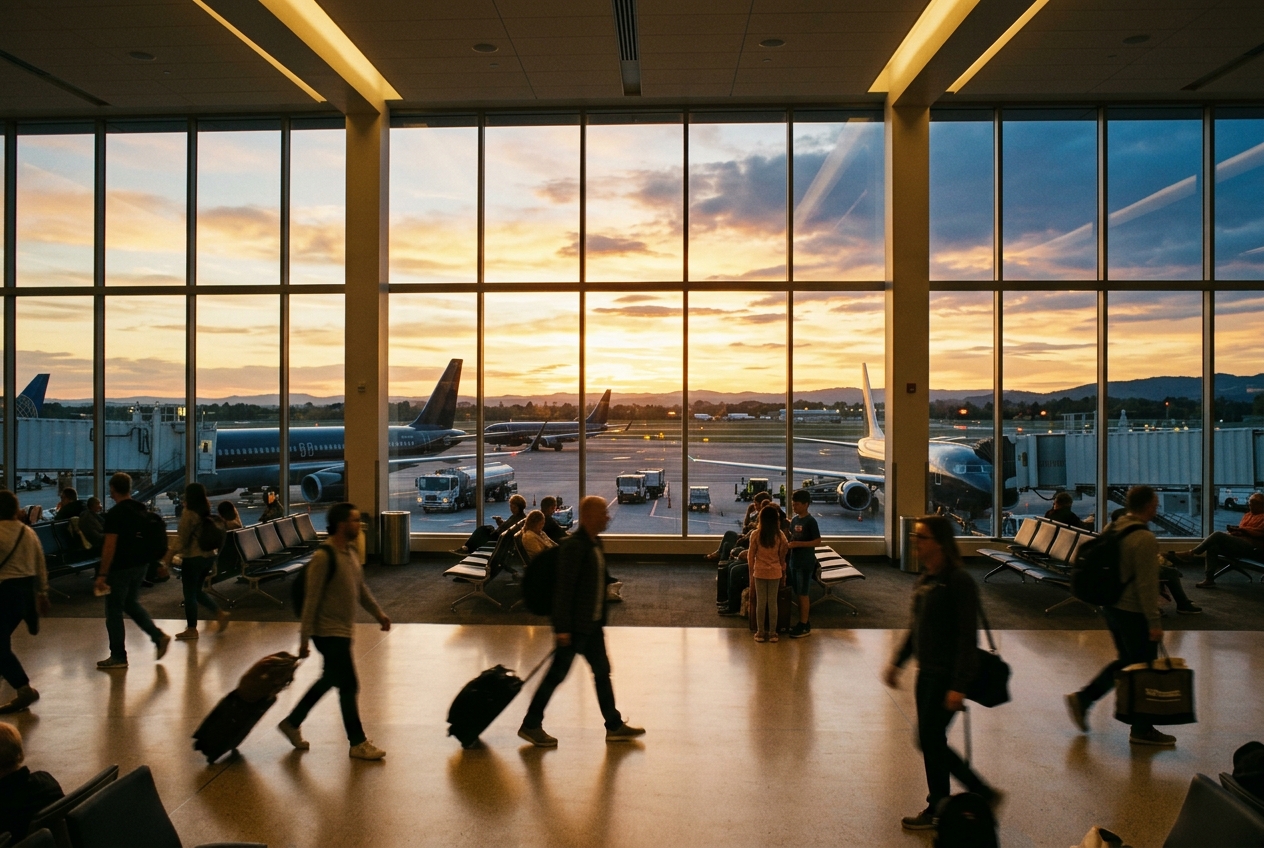
Kota Kinabalu International Airport
Sabah's gateway to Borneo and beyond.
- ›Second busiest airport in Malaysia after Kuala Lumpur International Airport.
- ›Serves as a key gateway for tourism to Sabah, including Mount Kinabalu and the Coral Triangle.
- ›Operated by Malaysia Airports Holdings Berhad (MAHB).
- ›The airport runway extends close to the South China Sea coastline, offering scenic approaches.
- ›Has international routes to China, Hong Kong, Singapore, South Korea, and other Asian destinations.
Kota Kinabalu International Airport (BKI) is the second busiest airport in Malaysia, serving as the primary gateway to Sabah and the wider Borneo region. Opened in its current form in 1992, it handles millions of tourists annually drawn to Mount Kinabalu, the Coral Triangle, and Sabah's renowned wildlife. The airport plays a strategic role in connecting East Malaysia with Peninsular Malaysia, Southeast Asia, and beyond.
- Terminal 1 — The main international and domestic terminal handling the majority of scheduled flights including Malaysia Airlines and AirAsia operations.
- Terminal 2 — A separate low-cost carrier terminal primarily serving additional budget airline routes and overflow domestic traffic.
- Airport bus services connecting to Kota Kinabalu city centre and Wawasan Plaza
- Metered taxis and airport coupon taxis available at designated stands outside arrivals
- Ride-hailing apps such as Grab operating throughout the airport area
- Car rental counters from Hertz, Avis, and local operators inside the terminal
- Hotel shuttle services offered by many properties in the city and beach resort areas
- Shangri-La Tanjung Aru Resort & Spa
- Cititel Express Kota Kinabalu
- Tune Hotel Kota Kinabalu
- Le Méridien Kota Kinabalu
- Holiday Inn Express Kota Kinabalu City Centre
Inside the terminals, travellers will find a mix of local Malaysian fare, fast food chains such as McDonald's and KFC, and café options serving kopi and light snacks. The area around Tanjung Aru near the airport offers excellent seafood restaurants where fresh catch is a highlight. For a broader dining experience, the city's famous Filipino Market and Waterfront Esplanade are a short taxi ride away.
- Allow extra time when travelling between Terminal 1 and Terminal 2 as they are not directly connected and require a short transfer.
- Exchange currency at the airport counters or city money changers; rates in town are generally better than airside.
- Sabah imposes its own entry requirements for Peninsular Malaysian and foreign nationals — confirm documentation before travel.
- Book Mount Kinabalu climbing permits and national park accommodation well in advance, especially during peak season from March to August.
AI-assisted overview, verified against public sources.
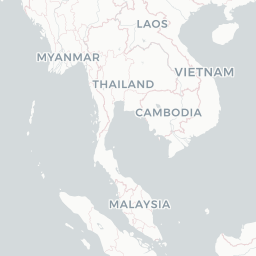
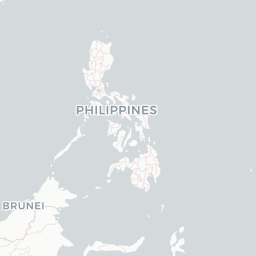
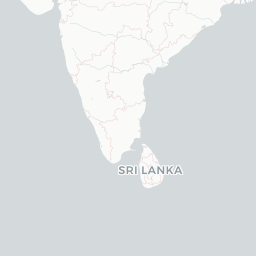
Route map (30 destinations)





Airlines serving this airport
Routes
Pick what matters for your layover or early flight, then compare on your favorite booking site.
IndianAirports may receive compensation when you book or purchase through some of the links on this page, at no additional cost to you. Prices and availability are set by the booking provider and may change. We never share your private trip details with partners — only the destination, dates and party size you searched.
City & Place Guide
No guide exists for this place yet — Click to generate a Traveler Pulse guide.
Passport, Visa & Immigration
Flying internationally via BKI? Check entry, transit and customs requirements for Malaysia from official government sources.

Kota Kinabalu International Airport (KKIA) is an international airport in Kota Kinabalu, the state capital of Sabah, Malaysia, approximately 8 km (5.0 mi) southwest of the city centre. In 2024, the airport handled over 7.95 million passengers, making it the second busiest airport in Malaysia after Kuala Lumpur International Airport in terms of both passenger and aircraft movements, though the number fell short of its peak in 2019, when it recorded over 9 million passengers. It is also the third busiest in Malaysia for cargo.
Read full article on Wikipedia