Overview
Leupp is a small, unincorporated community of roughly 950 residents situated on the Navajo Nation in Coconino County, northeastern Arizona. It sits at approximately 4,800 feet elevation on the high desert plateau, where the landscape opens into wide vistas of red earth, sage scrub, and distant mesas.
The community takes its name from Francis Ellington Leupp, a Commissioner of Indian Affairs in the early 1900s. A Bureau of Indian Affairs school was established here in that era, and Leupp has functioned primarily as a local service and chapter community for the surrounding rural Navajo population ever since.
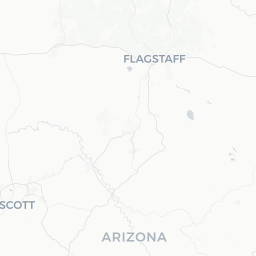
For travelers, Leupp is less a destination in itself and more a gateway to understanding the quiet, working life of a rural Navajo Nation community. It lies roughly 30 miles east of Flagstaff along Route 99, making it a possible detour for those exploring the region between Flagstaff and the eastern Navajo Nation. Visitors should approach respectfully, as this is a living community and not a tourist attraction.
Before You Go
Navajo Nation Entry Considerations
Leupp is within the boundaries of the Navajo Nation, a sovereign tribal nation. Travelers should be aware that tribal lands have their own regulations, which can differ from state and federal rules. Check current entry requirements and any permit requirements directly with the Navajo Nation's official channels before visiting, as policies can change.
Visas
For international visitors, standard US entry requirements apply. For destination-specific visa guidance, visit TravelerPulse's Visas section and consult the US Citizenship and Immigration Services (USCIS) official website.
Timezone Note
Unique in Arizona, the Navajo Nation — including Leupp — observes Daylight Saving Time. This means the community is on the same time as Mountain Daylight Time in summer, one hour ahead of the rest of Arizona. Confirm your clock settings if driving from Flagstaff or elsewhere in the state.
What to Bring
- Adequate water: services are extremely limited in the area
- Fuel: fill up in Flagstaff before heading out; there are no guarantees of fuel availability in Leupp
- Cash: do not rely on card payment infrastructure in small rural communities
- Sun protection, layers, and a spare tire for travel on unpaved roads
Getting There
Leupp is accessible primarily by private vehicle. From Flagstaff, travel east on Interstate 40 to exit 201, then north on Navajo Route 15 (Leupp Road) for approximately 30 miles. The road is paved but can be affected by weather; check conditions before travel, especially in winter or monsoon season (July–September).
There is no commercial air service, rail connection, or scheduled bus service to Leupp. The nearest commercial airport is Flagstaff Pulliam Airport (FLG), and Phoenix Sky Harbor International Airport (PHX) is roughly two and a half hours to the south — verify current driving times, as road conditions vary.
If traveling as part of a larger Navajo Nation itinerary, Leupp can be a waypoint between Flagstaff and communities further east such as Winslow or Holbrook.
Getting Around
There is no local public transportation in Leupp. A private vehicle with good ground clearance is the practical requirement for exploring this area. Some roads on the surrounding Navajo Nation are unpaved, and conditions vary significantly by season.
GPS coverage can be inconsistent on rural Navajo Nation roads. A downloaded offline map or a physical map is advisable. Inform someone of your route and expected return time when venturing onto remote roads in this region.
Things to See & Do
Leupp itself does not have tourist attractions or visitor infrastructure. The draw for travelers is the surrounding high desert landscape and the broader Navajo Nation cultural context.
Landscape and Scenery
The desert plateau around Leupp offers unobstructed views of open sky, distant mesa formations, and the high desert ecosystem. The area is quiet and relatively unvisited, offering a stark contrast to the busier parts of the Navajo Nation.
Proximity to the Little Colorado River
The Little Colorado River flows through the general region. Depending on seasonal conditions, the river and its surrounding terrain can offer opportunities for photography and contemplation of the arid landscape. Access and conditions should be verified locally before attempting any off-road exploration.
Cultural Awareness
If you encounter local residents, engage respectfully. Photography of people, homes, and ceremonial or private spaces requires explicit permission. The Navajo Nation has cultural protocols around photography and visitation; follow them carefully. Leupp is not a heritage tourism site — it is a functioning community.
Food & Drink
Visitor-facing dining options in Leupp are extremely limited or nonexistent at the time of writing. Travelers should plan to bring their own food and water, or eat before arriving from Flagstaff or another nearby town.
Alcohol is prohibited on the Navajo Nation. This applies throughout Leupp and the surrounding tribal lands. Respect this law without exception.
Verify any current local services on arrival or through the Navajo Nation chapter house, as small community amenities can change.
Practical Information
Emergency Services
Emergency response times in rural Navajo Nation communities can be lengthy due to distances involved. The Navajo Nation Police Department serves the area. For emergencies, dial 911; confirm local dispatch details in advance of your visit.
Connectivity
Cell coverage in Leupp and the surrounding area is limited. Some carriers have partial coverage; others have none. Do not rely on mobile data or voice calls as a safety backup without first testing your provider's coverage map for this area.
Fuel and Supplies
Stock up on fuel, water, food, and any medications in Flagstaff before heading to Leupp. Do not assume any retail services will be available.
Respect for Sovereignty
The Navajo Nation is a sovereign tribal nation. Visitors are guests on tribal land and should conduct themselves accordingly — following posted rules, not entering restricted or private areas, and adhering to tribal law, including the alcohol prohibition.
Safety
Leupp is a quiet rural community and generally presents no unusual safety concerns for respectful travelers. The primary practical safety considerations are environmental: extreme temperatures, remote location, limited services, and unpredictable road conditions.
In summer, daytime temperatures on the high desert can exceed 95°F (35°C). In winter, temperatures can drop well below freezing, and snow or ice can make Leupp Road hazardous. The monsoon season (roughly July through September) brings sudden, intense rainstorms that can cause flash flooding on and near washes and low-lying roads.
Travelers should let someone know their itinerary, carry extra water (at least one gallon per person per day is a common desert recommendation), and ensure their vehicle is in reliable condition before heading into the area.
Local Culture & Etiquette
Leupp sits within the Navajo Nation, home to the Diné people and one of the largest Native American nations in the United States by both land area and population. The Navajo language (Diné bizaad) is spoken widely in the community alongside English.
Navajo culture encompasses rich traditions in weaving, silversmithing, oral storytelling, and ceremony. However, travelers should understand that rural chapter communities like Leupp are not set up for cultural tourism, and many ceremonies and practices are private. Do not seek out or photograph ceremonial activity without invitation.
Approaching the community with humility and curiosity — rather than as a visitor expecting a curated experience — is the appropriate mindset. If you are genuinely interested in Navajo culture and history, consider visiting established cultural centers such as the Navajo Nation Museum in Window Rock, where educational programming is designed for public engagement.