Translate
Overview
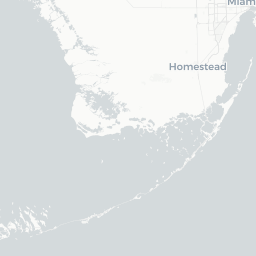
Homestead sits at the southern tip of the Florida mainland, roughly 35 miles southwest of Miami. With a population of around 80,000, it functions more as a working agricultural city than a tourist destination in its own right — and that unpretentious character is part of its appeal. Strawberries, tomatoes, tropical fruits, and ornamental plants grown in the surrounding flatlands have shaped the local economy and culture for generations.
The city's greatest draw is its location. Two of the most ecologically significant protected areas in the United States — Everglades National Park and Biscayne National Park — are accessible within a short drive of downtown Homestead. Visitors who base themselves here spend days hiking, kayaking, snorkeling, and wildlife watching in landscapes that feel remote despite being close to a major metropolitan area.
Homestead was nearly erased by Hurricane Andrew in 1992, and the rebuilt city still carries traces of that history. The recovery shaped a community that is notably resilient and diverse, with a large Latino population — particularly Haitian and Latin American communities — lending the city a cultural texture distinct from the rest of South Florida.
Before You Go
Visas
Homestead is a US destination. Entry requirements depend on your nationality. Check TravelerPulse's Visas section and the official US Customs and Border Protection website (cbp.gov) for current requirements.
Climate
South Florida has two distinct seasons. The dry season (November–April) brings lower humidity, temperatures typically in the 60s–70s°F (15–25°C), and minimal rain — ideal for park visits. The wet season (May–October) brings daily afternoon thunderstorms, high humidity, heat in the upper 80s–90s°F (30–35°C), and the possibility of tropical storms or hurricanes. Mosquitoes are intense in summer, particularly near wetlands.
What to Pack
- Insect repellent (essential near the Everglades at any time of year)
- Sunscreen and a wide-brim hat
- Waterproof footwear or sandals suitable for wet trails
- A reusable water bottle — hydration is critical in the heat
- Light, moisture-wicking clothing
National Park Passes
If you plan to visit both Everglades and Biscayne national parks, the America the Beautiful annual pass (available from the National Park Service) can offer savings. Verify current pricing at nps.gov.
Getting There
By Air
Miami International Airport (MIA) is the primary arrival point, located approximately 35–40 miles north of Homestead. Fort Lauderdale-Hollywood International Airport (FLL) is a further but viable alternative. Neither airport has direct rail or bus service to Homestead, so a rental car, rideshare, or pre-arranged shuttle is necessary.
By Car
Homestead is easily reached via Florida's Turnpike (SR 821), which terminates near the city, or US-1 (South Dixie Highway), the main arterial road running through downtown. Driving from Miami takes roughly 45–60 minutes depending on traffic. A car is essentially required for visiting the national parks.
By Bus
Miami-Dade Transit operates bus routes connecting Homestead to the greater Miami area, including a Busway corridor ending in South Miami-Dade. Journey times are long by transit. Verify current routes and schedules at miamidade.gov/transit.
Getting Around
Homestead is a car-dependent city, and a personal vehicle or rental car is by far the most practical way to get around — both within the city and to reach the national parks. Rideshare services (Uber, Lyft) operate here but availability can be inconsistent, particularly late at night or in park areas.
Downtown Homestead is compact and walkable if you are staying centrally. Krome Avenue and the historic downtown area can be explored on foot. Cycling is possible on flat terrain but infrastructure is limited and distances between attractions are significant.
For Everglades National Park, note that the main visitor center (Ernest F. Coe) is about 10 miles west of Homestead, and the park road extends another 38 miles to Flamingo with no public transportation. For Biscayne National Park, the Dante Fascell Visitor Center is located in Convoy Point, roughly 9 miles east of Homestead.
Things to See & Do
Everglades National Park
The largest subtropical wilderness in the United States begins just outside Homestead. The Ernest F. Coe Visitor Center is a logical starting point. Popular activities include hiking the Anhinga Trail (an easy 0.8-mile loop with outstanding wildlife viewing), the Gumbo Limbo Trail, and longer backcountry routes. Guided tram tours to Shark Valley are operated by a concessionaire — check nps.gov/ever for details and to verify schedules.
Biscayne National Park
Often overlooked, Biscayne protects the northernmost Florida Keys, a living coral reef, and shallow bay waters. The vast majority of the park is underwater, making it ideal for snorkeling, scuba diving, glass-bottom boat tours, and kayaking. The Dante Fascell Visitor Center offers orientation, and concessionaire boat tours depart from Convoy Point — verify availability and booking requirements at nps.gov/bisc.
Coral Castle Museum
This unusual folk-art site on US-1 was built single-handedly by Latvian immigrant Edward Leedskalnin in the early 20th century using massive oolite limestone blocks. It is genuinely enigmatic and worth a stop. Verify current admission fees and hours at coralcastle.com.
Homestead Motorsports Complex
The city is home to a major motorsports facility that hosts NASCAR, IMSA, and other racing events. If a race weekend coincides with your visit, it adds a distinctive local experience. Check homesteadmiamispeedway.com for the event calendar.
Fruit and Farm Stands
The surrounding agricultural area is one of the most productive in the US. Robert Is Here, a family-run fruit stand on SW 344th Street, has operated for decades and sells rare tropical fruits, juices, and local produce. Seasonal availability varies — visiting in winter and spring offers the widest selection.
Food & Drink
Homestead's dining scene reflects its multicultural population and agricultural roots. You will find Cuban and Latin American food well represented — comida criolla, Cuban sandwiches, and fresh tropical fruit smoothies are easy to find along Krome Avenue and US-1.
The proximity to farms means locally grown produce appears frequently in area restaurants and markets. Fresh tropical fruits including mamey sapote, lychee, carambola, and various avocado varieties are available at roadside stands during their respective seasons.
For a small city, Homestead has a range of independent restaurants rather than being dominated purely by chains. The downtown Krome Avenue corridor has seen gradual reinvestment and hosts a modest concentration of eateries. Dining options inside the national parks themselves are minimal — pack food and water before heading out.
Alcohol is widely available at restaurants and grocery stores. Florida has no statewide dry-county restrictions, though individual establishment policies vary.
Practical Information
Emergency Services
In any emergency in the United States, dial 911 for police, fire, or medical assistance.
Healthcare
Homestead has hospital facilities. Baptist Health South Florida and other providers serve the area. Travel insurance that includes medical coverage is strongly advisable for international visitors.
Money
ATMs are widely available. Major credit and debit cards are accepted at most businesses. Some farm stands and smaller local vendors operate cash-only — carry some cash when visiting agricultural areas.
Connectivity
Mobile coverage from major US carriers (Verizon, AT&T, T-Mobile) is generally good in the city but can be weak or absent in remote sections of Everglades National Park. Download offline maps before heading into the parks.
Tipping
Standard US tipping norms apply: 18–20% at sit-down restaurants, a few dollars for tour guides and service providers. Tipping is customary, not mandatory, but is a meaningful part of service workers' income.
Safety
Homestead is generally a safe destination for travelers exercising normal awareness. As with any city, it is sensible to stay alert in unfamiliar areas, secure valuables in vehicles out of sight, and be aware of your surroundings at night.
The primary safety considerations in this region are environmental. In Everglades National Park, do not approach alligators or crocodiles — both species are present and are wild animals. Stay on marked trails, and be aware that lightning risk is extremely high in Florida during afternoon thunderstorms in the wet season. Always carry more water than you think you need.
Hurricane season runs from June 1 through November 30. Monitor the National Hurricane Center (nhc.noaa.gov) for any active advisories if traveling during this period, and have an evacuation plan if a storm threatens. The low-lying geography of South Florida leaves little margin in major storm events.
Local Culture & Etiquette
Homestead's cultural identity has been shaped by successive waves of migration. Cuban and Latin American communities established deep roots here from the mid-20th century onward, and a significant Haitian community has made Homestead one of the more notable Haitian cultural centers in South Florida. This diversity is visible in the city's food, music, religious institutions, and day-to-day street life.
The agricultural heritage is also a point of local pride. The area's farming families — many of whom have worked the land for multiple generations — maintain traditions tied to the seasonal rhythms of planting and harvest. Visiting a farm stand or the Redland area feels meaningfully different from the tourist-oriented economy of nearby Miami Beach.
The annual Homestead Championship Rodeo, held each February, is one of the oldest rodeos in Florida and reflects an older Floridian farming and ranching tradition that is easy to overlook this close to a major city. Verify current dates and details locally before planning around it.